Headright Definition. The headright system tried to solve the labor shortage by providing colonists with land for each indentured servant they transported to virginia. Colonists already residing in virginia were granted two headrights, meaning two tracts of 50 acres each, or a total of 100 acres of land.
What is the headright gadget? Meaning of headright in english: The character who has the “right” to allege the property is the one who paid to carry any person to the colony.
The Virginia Company Of London Gave Headrights To Settlers, And The Plymouth Company Followed Suit.
The headright system was used in several colonies, including maryland, georgia, north. What is the headright gadget? Tribal trust fund is governed by the allotment act of 1906.
The System Was Used Mainly In.
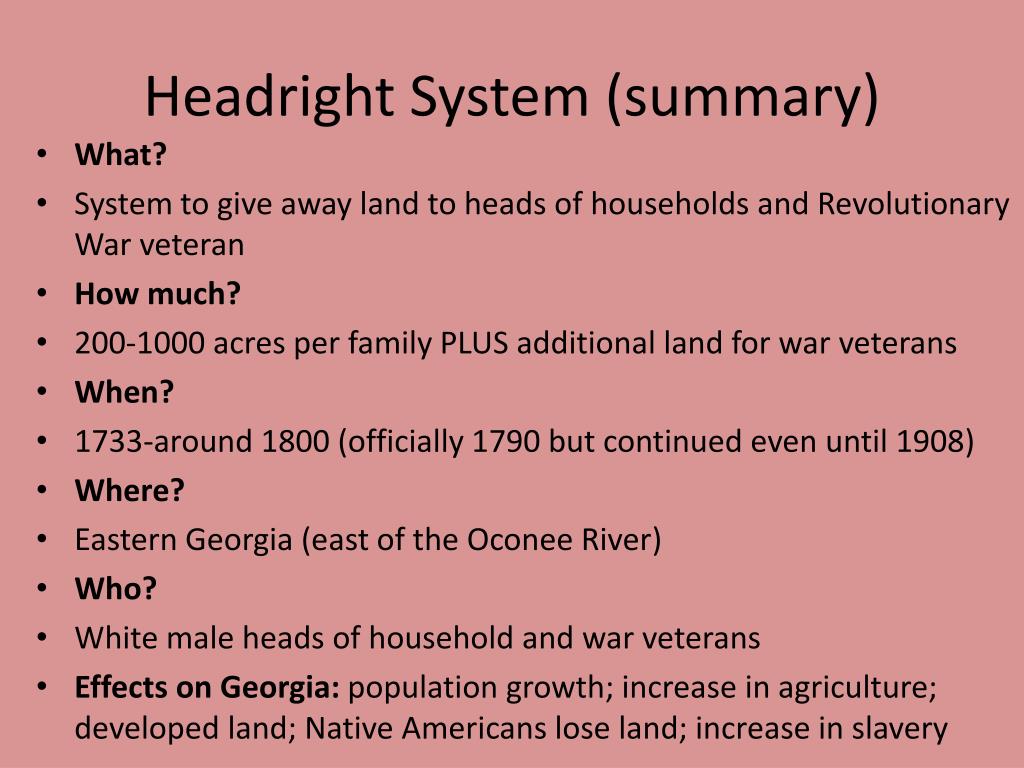
By 1846 we had moved past the line of settlement, to my father's headright on the pedernales. Headrights are most notable for their role in the expansion of. The headright system referred to a grant of land, usually 50 acres, given to settlers in the 13 colonies.
The Practice Was Continued Under The Royal Government Of Virginia After The Dissolution Of The Virginia Company, And The Privy Council Ordered On 22 July 1634 That Patents For Headrights Be Issued.
The right to receive fifty acres per person, or per head, was called a headright. This type of trust fund is funded by mineral royalties that arise from land held by. Definition & history december 7, 2020 / in feeds / by publisher.
A Headright Is A Legal Grant Of Land To Settlers.
[noun] the main saw in a mill with or without other saws or associated equipment. Headrights are most notable for their role in the expansion of the thirteen british colonies in north america; Headright definition, a beneficial interest for each member of an indian tribe in the tribal trust fund accruing from the lease of tribal oil, gas, and mineral rights, the.
Definition Of Headright 1 :
A beneficial interest for each member of an indian tribe in the tribal trust fund accruing from the lease of tribal oil, gas, and mineral rights, the sale of tribal lands, etc. The character who has the “right” to allege the property is the one who paid to carry any person to the colony. A grant (as of money or land) formerly given one who fulfilled certain conditions relating especially to settling and developing land (as in virginia in 1619 and in texas in 1839)
