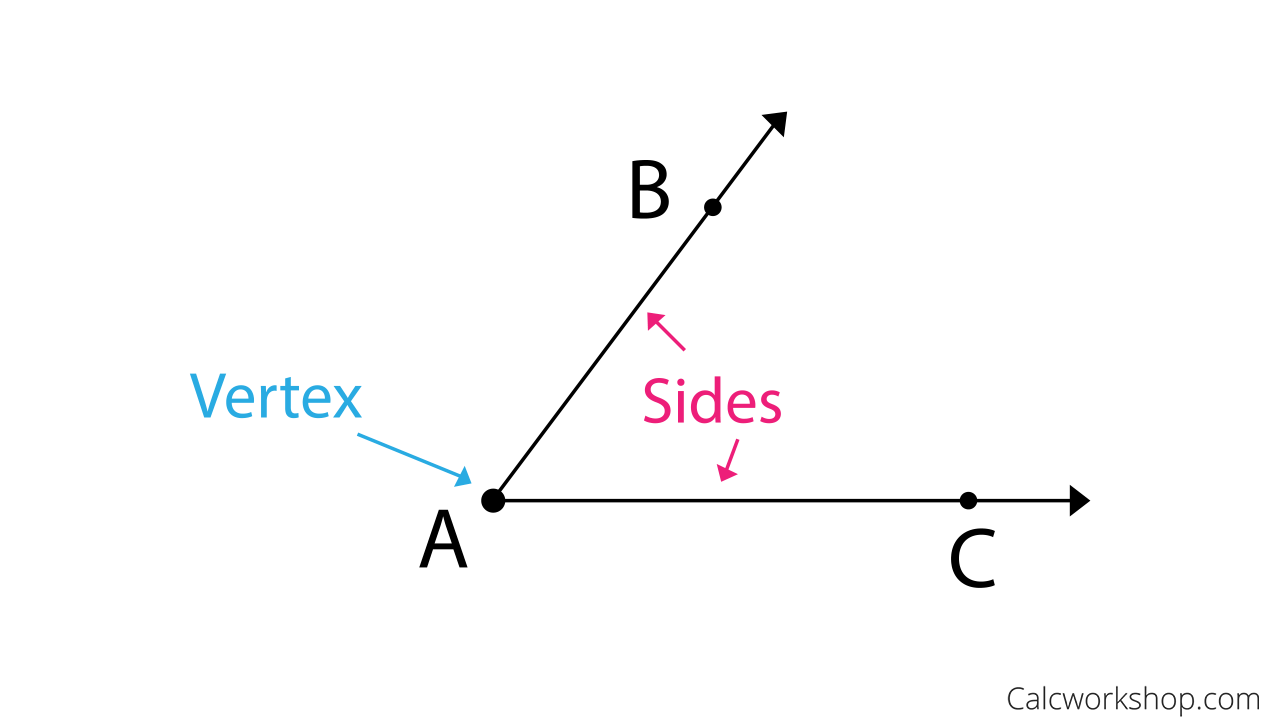
Initial Side Of An Angle. In trigonometry, angles are placed on coordinate axes. The initial side of an angle is the starting position of the rotated ray in the formation of an angle.
Angle Addition Postulate (Defined w/ 29+ Examples!) from calcworkshop.com
We will typically use the greek letter θ to denote an angle. With a point/vertex at the point (0,0). The other side of the angle is called the terminal side.
What Does Terminal Side Mean?
The initial side is the starting side of the angle, and the terminal side is the ending side. If the terminal side is in the 2nd quadrant, we call the angle a 2nd quadrant angle. Translation of initial side of an angle in amharic.
The Ray Where Measurement Of An Angle Starts.
When the rotation is clockwise, we say the angle is negative. Counterclockwise direction from the initial side to the terminal side. With a point/vertex at the point (0,0).
The Angle Is Formed By Rotating The Intial Side About The Origin In A Positive Or Negative Direction.
The measure of an angle describes the magnitude and direction of the rotation of the ray from its initial position to its terminal position. We imagine the angle being swept out starting from an initial side and ending at a terminal side, as shown below. We determine the coterminal angle of a.
The Greek Letter Theta Is Often Used To Represent An Angle Measure.
We will typically use the greek letter θ to denote an angle. Initial side of an angle. Definition of initial side :
Definition Of Initial Side Of An Angle Is የዘዌ መነሻ ጐን.
A straight line that has been rotated around a point on another line to form an angle measured in a clockwise or counterclockwise direction — compare initial side. This is called the initial side of the angle. Characteristics of the sides of angles the interior of an angle is the set of all points between the two sides that form the angle.